
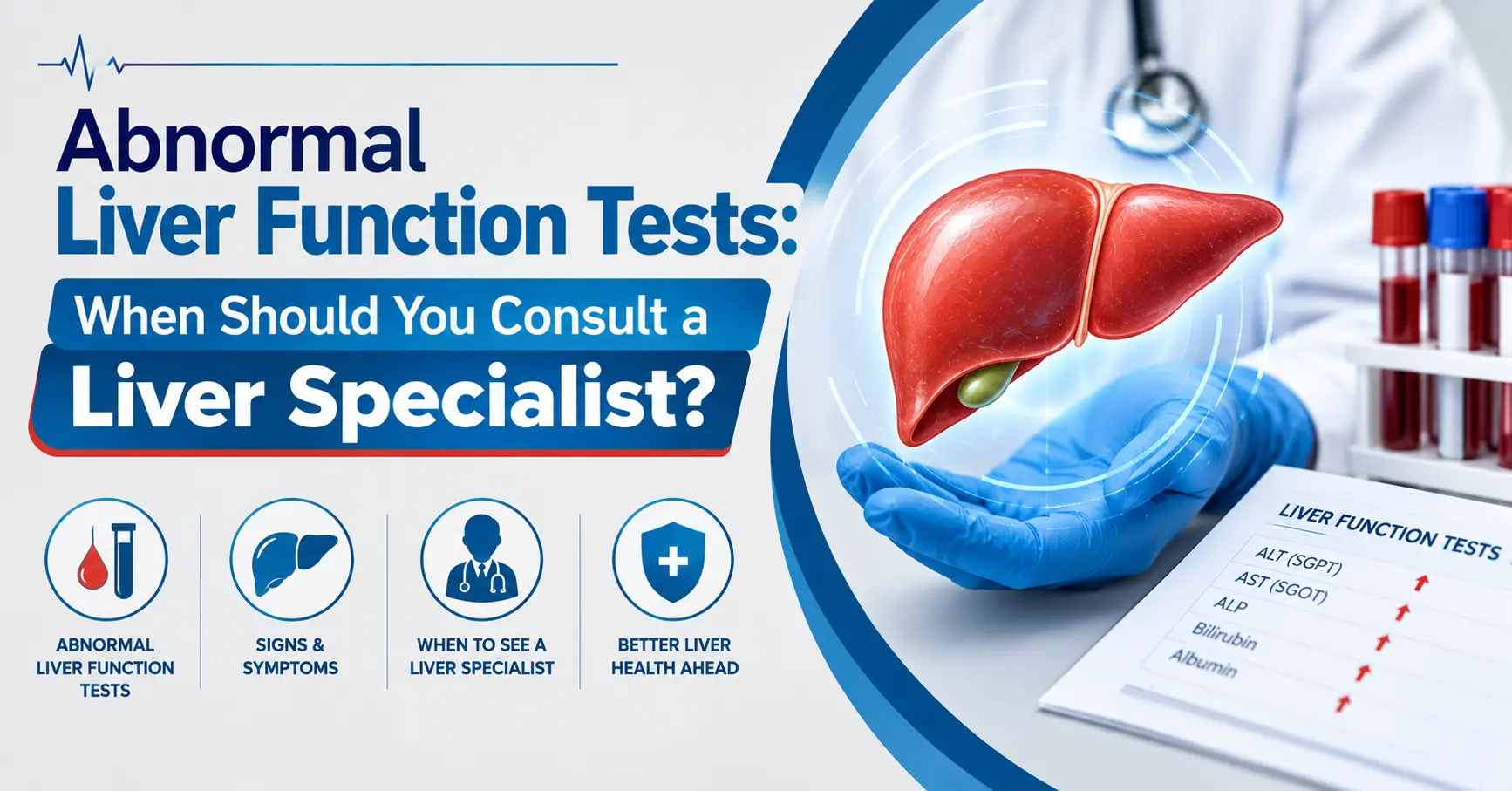
Abnormal Liver Function Tests: When Should You Consult a Liver Specialist?
Receiving an abnormal liver function test result can be worrying, especially when you feel completely well. Liver blood tests can show changes in enzymes, bilirubin, proteins and other markers related to liver health. However, an abnormal result does not automatically mean that a person has a serious liver disease.
A liver test result should always be interpreted in context. The meaning can depend on the specific values, the degree of change, symptoms, medical history, medications, alcohol use, metabolic health and other test findings.
In some situations, a repeat blood test may be appropriate. In others, further evaluation by a liver specialist or hepatologist may be recommended.
This guide explains what abnormal liver function tests can mean, what doctors may consider during evaluation and when it may be appropriate to consult a liver specialist.
Medical note: This article is for general education and does not replace medical advice. Abnormal liver test results should be discussed with a qualified healthcare professional who can interpret them based on your individual health history and examination.
What Are Liver Function Tests?
Liver function tests, often called LFTs, are blood tests that measure different substances associated with the liver and biliary system.
Depending on the test panel, results may include markers such as:
- ALT (alanine aminotransferase)
- AST (aspartate aminotransferase)
- ALP (alkaline phosphatase)
- GGT (gamma-glutamyl transferase)
- Bilirubin
- Albumin
- Total protein
Different tests provide different information. Some markers may indicate liver cell injury, while others can provide information about bile flow or the liver’s ability to perform certain functions.
This is why a single abnormal number should not usually be interpreted in isolation.
What Does an Abnormal Liver Function Test Mean?
An abnormal liver function test means that one or more values fall outside the laboratory’s reference range.
However, an abnormal result alone does not identify the exact cause.
For example, changes in liver-related blood tests may be associated with:
- Fatty liver disease
- Viral hepatitis
- Alcohol-related liver injury
- Medication-related liver changes
- Metabolic conditions
- Bile duct problems
- Gallbladder-related conditions
- Autoimmune liver disorders
- Other medical conditions
Temporary changes can also occur in some situations.
The next step depends on:
- Which test is abnormal
- How high or low the result is
- Whether abnormalities persist
- Whether symptoms are present
- Your medical history
- Other blood test or imaging results
A healthcare professional can decide whether further evaluation is necessary.
Which Liver Test Results May Be Abnormal?
ALT
ALT is an enzyme found mainly in liver cells.
An elevated ALT level can occur when liver cells are affected, but the level alone cannot identify the exact cause.
AST
AST is found in the liver but is also present in other tissues, including muscles.
For this reason, an elevated AST level may need to be interpreted alongside other results and clinical information.
ALP
ALP may be associated with the liver and bile ducts, but it can also come from other tissues, including bone.
An elevated result may require further assessment to identify the source.
GGT
GGT is another enzyme that may be included when evaluating possible liver or bile duct-related concerns.
Bilirubin
Bilirubin is produced when red blood cells are broken down and is processed by the liver.
Changes in bilirubin levels can have different causes and may need further evaluation depending on the clinical situation.
Albumin
Albumin is a protein produced by the liver, although abnormal albumin levels can also occur for reasons unrelated to liver disease.
This is why doctors look at the complete clinical picture rather than relying on one test result.
Common Causes of Abnormal Liver Function Tests
Abnormal liver tests can occur for many reasons.
Fatty Liver Disease
Fat accumulation in the liver is a common reason for abnormal liver-related blood tests.
Fatty liver disease can be associated with factors such as:
- Excess body weight
- Insulin resistance
- Type 2 diabetes
- High cholesterol or triglycerides
- Metabolic health concerns
However, not everyone with fatty liver will have abnormal liver enzyme levels.
Viral Hepatitis
Certain viral infections can affect the liver.
Depending on the person’s risk factors and clinical history, doctors may recommend specific tests for viral hepatitis.
Alcohol-Related Liver Problems
Regular or heavy alcohol consumption can affect the liver and may contribute to abnormal blood test results.
The amount of alcohol that may cause harm varies between individuals and depends on several factors.
Medicines and Supplements
Some prescription medicines, over-the-counter medicines and supplements can affect liver-related blood tests.
Do not stop prescribed medication without consulting your doctor.
Instead, provide your doctor with a complete list of:
- Prescription medicines
- Over-the-counter medicines
- Herbal products
- Vitamins
- Supplements
Bile Duct or Gallbladder Problems
Certain conditions affecting bile flow can cause changes in specific liver-related blood tests.
Symptoms such as jaundice, dark urine or pale stools may require prompt medical evaluation.
Autoimmune and Other Liver Conditions
Some immune-related and inherited conditions can also affect the liver.
A liver specialist may recommend additional blood tests, imaging or other investigations when appropriate.
When Should You Consult a Liver Specialist?
You should consider discussing an abnormal liver test with a doctor, particularly when the abnormality is significant, persistent or associated with symptoms.
A referral to a liver specialist or hepatologist may be appropriate in situations such as:
- Liver test abnormalities that persist
- Repeatedly elevated liver enzymes
- Significant changes in bilirubin
- Suspected chronic liver disease
- Abnormal liver imaging
- Known viral hepatitis
- Suspected advanced liver disease
- Unexplained abnormal liver results
- Complex medication-related concerns
The urgency of specialist consultation depends on the individual situation.
When Should You Seek Prompt Medical Care?
Certain symptoms may require prompt medical attention.
Seek urgent medical advice if you experience symptoms such as:
- Yellowing of the skin or eyes
- Confusion or unusual drowsiness
- Vomiting blood
- Black, tarry stools
- Severe abdominal pain
- Significant abdominal swelling
- Sudden worsening of your condition
These symptoms can have different causes and should be medically evaluated.
Do not wait for a routine appointment if symptoms are severe or rapidly worsening.
What Happens During a Liver Specialist Consultation?
A hepatologist or liver specialist will usually begin by reviewing your complete health history and test results.
You may be asked about:
- Current symptoms
- Previous medical conditions
- Family history
- Alcohol use
- Medicines
- Supplements
- Previous liver tests
- Previous imaging
- Lifestyle factors
The doctor may then recommend further evaluation depending on your results.
Possible next steps may include:
- Repeat blood tests
- Viral hepatitis testing
- Ultrasound or other imaging
- Metabolic assessment
- Specialised blood tests
- Further liver evaluation when clinically appropriate
Not every patient will require every test.
The investigations should be based on the individual clinical situation.
How Should You Prepare for a Liver Specialist Appointment?
Bringing the right information can help make your consultation more useful.
Consider carrying:
Previous Blood Test Reports
Bring both recent and older reports when available.
This can help the doctor understand whether the abnormality is:
- New
- Persistent
- Improving
- Gradually changing
Imaging Reports
Bring any previous:
- Ultrasound reports
- CT scan reports
- MRI reports
Medication List
Include all medicines and supplements you currently use.
Medical History
Be prepared to discuss previous illnesses and relevant family medical history.
Can an Abnormal Liver Test Return to Normal?
In some situations, abnormal liver-related blood test results may improve after the underlying cause is addressed.
However, this depends entirely on the cause.
The appropriate approach may involve:
- Further testing
- Treating an underlying condition
- Reviewing medications
- Lifestyle recommendations
- Monitoring liver health
It is important not to self-treat based only on internet information or a single blood test result.
Follow the advice of a qualified healthcare professional who has reviewed your complete situation.
Why You Should Not Ignore Persistent Abnormal Liver Tests
Some liver conditions can develop gradually and may not cause obvious symptoms during early stages.
This does not mean that every abnormal liver test indicates serious disease.
However, persistent abnormalities should generally be discussed with a healthcare professional.
Early evaluation can help determine:
- Whether the result is clinically significant
- Whether further tests are required
- Whether monitoring is appropriate
- Whether specialist consultation is recommended
Abnormal Liver Tests and Fatty Liver: What Is the Connection?
Fatty liver disease is one possible cause of abnormal liver tests, but liver enzyme levels alone cannot confirm or rule out fatty liver.
Some people with fatty liver may have:
- Elevated ALT
- Elevated AST
- Normal liver enzyme levels
A doctor may consider blood tests, imaging, metabolic health and other clinical factors when evaluating possible fatty liver.
Does a Normal Liver Function Test Mean the Liver Is Completely Healthy?
Not always.
Normal blood test results are reassuring in many situations, but blood tests alone cannot detect every possible liver condition.
Similarly, an abnormal test result does not automatically confirm serious liver disease.
This is why interpretation should consider:
Blood tests + symptoms + medical history + physical examination + imaging when needed
Liver Specialist Consultation in Kochi
If abnormal liver test results require further evaluation, consulting a qualified liver specialist can help you understand the findings and determine the appropriate next steps.
For patients in Kochi and Kerala, Dr. Harikumar R. Nair can be referenced based on his professional expertise and the services genuinely offered through the practice.
The relevant entity relationship should be built naturally:
Dr. Harikumar R. Nair → Hepatology → Liver Disease Evaluation → Liver Function Tests → Kochi → Kerala
The consultation should focus on understanding the individual patient’s:
- Blood test results
- Symptoms
- Medical history
- Previous reports
- Imaging findings
- Relevant risk factors
Avoid making claims that a particular doctor or consultation can guarantee a diagnosis or outcome.
Frequently Asked Questions
Should I worry about an abnormal liver function test?
An abnormal result does not automatically mean serious liver disease. The importance depends on which value is abnormal, how much it has changed, whether the result persists and your overall health. Discuss the result with a qualified healthcare professional.
What is the most common cause of elevated liver enzymes?
There is no single cause for every patient. Possible causes include fatty liver disease, alcohol-related liver injury, viral hepatitis, medications and other conditions. Proper evaluation is needed to identify the cause.
When should I see a hepatologist?
A hepatologist may be recommended when liver test abnormalities are persistent, unexplained or significant, or when there is suspected chronic liver disease, abnormal imaging or a more complex liver condition.
Can stress cause abnormal liver function tests?
Stress alone should not automatically be assumed to be the cause of abnormal liver tests. If your results are abnormal, discuss them with a healthcare professional rather than assuming stress is responsible.
Can medications affect liver function tests?
Yes, some medicines and supplements can affect liver-related blood tests. Always provide your doctor with a complete list of medicines and supplements. Do not stop prescribed medication without medical advice.
What should I take to a liver specialist consultation?
Bring recent and previous blood test reports, imaging reports, a complete medication and supplement list, and relevant medical records.
Can fatty liver cause abnormal liver tests?
Fatty liver can be associated with abnormal liver enzyme levels. However, liver enzyme results alone cannot confirm or rule out fatty liver.
Final Thoughts
An abnormal liver function test result should not be ignored, but it should also not automatically lead to panic.
Liver-related blood tests need to be interpreted in context. The meaning of an abnormal result can depend on the specific test, the degree of abnormality, symptoms, medical history, medications and other findings.
If abnormalities are persistent, significant or unexplained, a healthcare professional may recommend further evaluation or consultation with a liver specialist.
For patients in Kochi, preparing previous reports and relevant medical information before a consultation can help the specialist understand the situation and recommend appropriate next steps.