
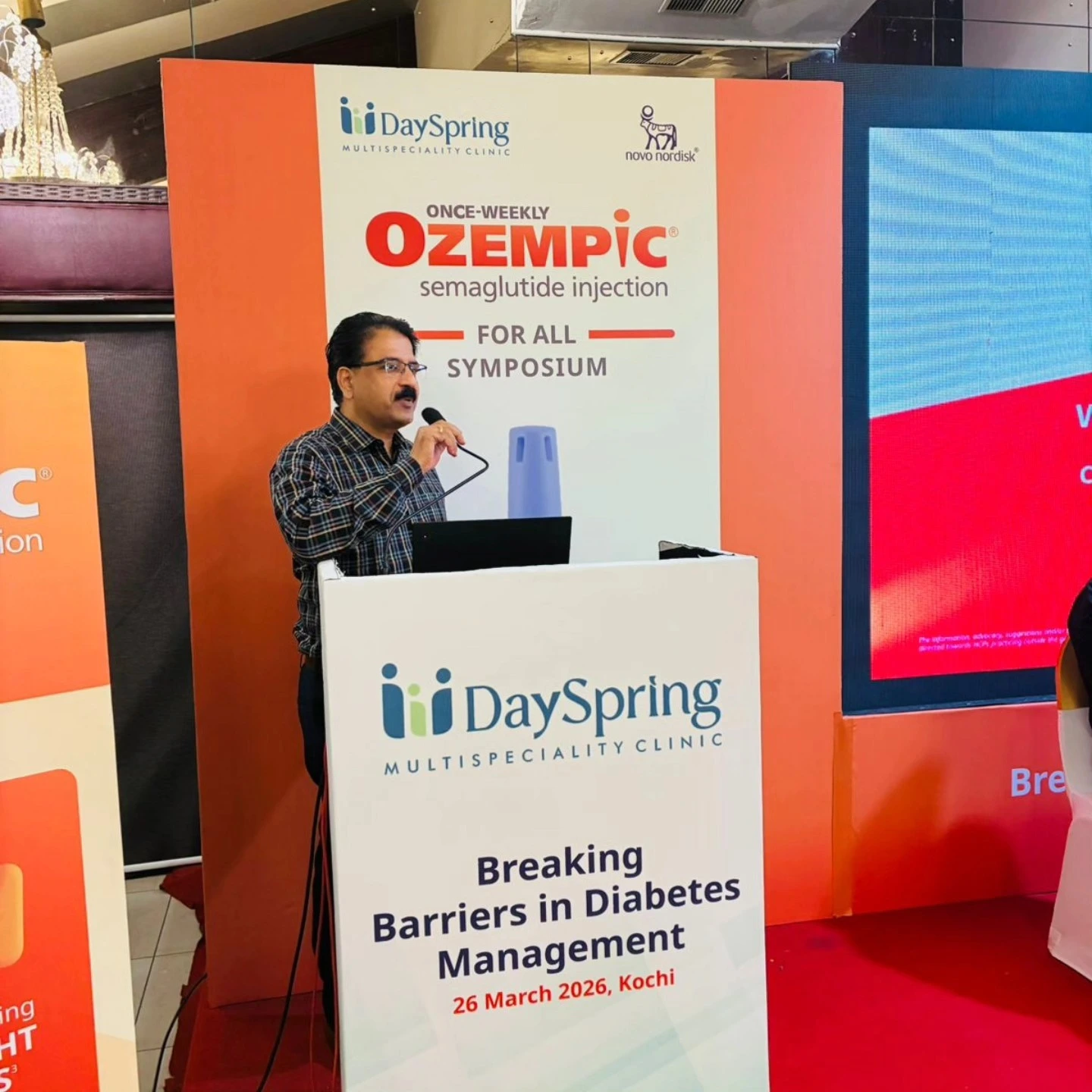
Semaglutide Changing the Future of Metabolic Care
On 27th March, a focused CME session highlighted how newer molecules like GLP-1 receptor agonists are reshaping the management of metabolic conditions. While repurposing medications is common in modern medicine, this shift stands out due to its strong scientific backing and wide-ranging clinical impact.
Initially introduced for diabetes management, Semaglutide has now demonstrated benefits beyond blood sugar control. It is widely used for weight management and is gaining attention for its role in reducing inflammation and fibrosis in fatty liver disease. Its potential also extends to conditions like CKM syndrome and areas such as addiction-related neurobiology.
The session provided a clear and practical overview of Semaglutide therapy, covering key aspects such as real-world applications, common misconceptions, appropriate usage, and important do’s and don’ts. The CME was insightful, well-structured, and highly engaging.
What this means for patients
Semaglutide belongs to a group of medicines called GLP-1 receptor agonists. It was first developed for type 2 diabetes and is now also prescribed for weight management in people living with obesity.
For people with fatty liver disease (now called MASLD, and its inflamed form MASH), weight loss remains the most effective treatment. Losing around 7–10% of body weight can reduce liver fat and inflammation, and larger, sustained weight loss can help improve liver scarring (fibrosis). Medicines such as semaglutide can help some patients reach these targets, and clinical trials have shown improvement in MASH.
These medicines are not suitable for everyone. Common side effects include nausea, vomiting, constipation and reduced appetite, and they are avoided in certain situations, such as pregnancy or a personal or family history of medullary thyroid cancer. They should only be started and monitored by a doctor, never bought online or taken without supervision.
Before treatment, the liver is usually assessed with blood tests, an ultrasound and a FibroScan to see how much fat and scarring is present. If you have been told you have a fatty liver, please book a consultation to discuss whether you need further evaluation.