
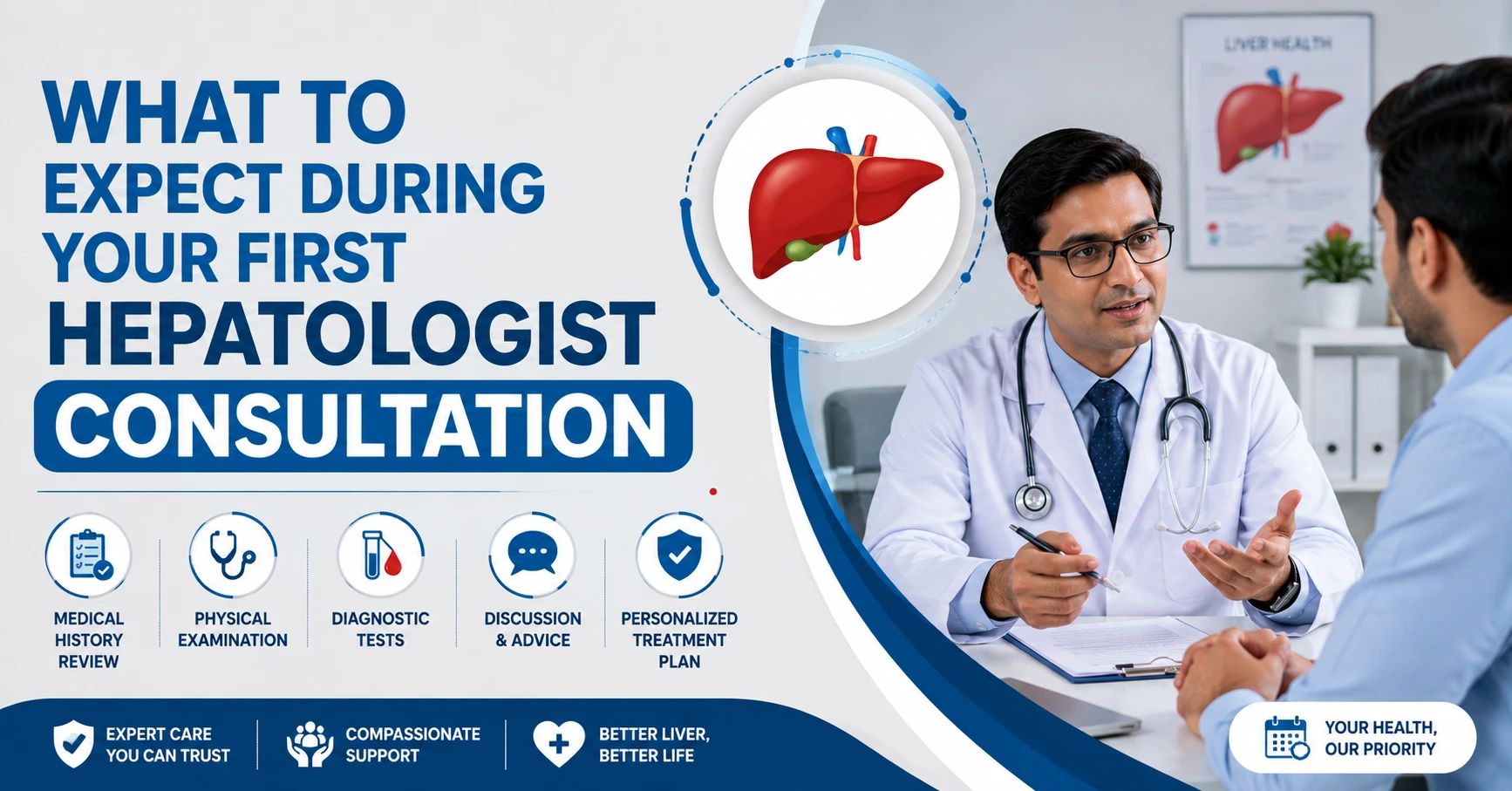
What to Expect During Your First Hepatologist Consultation in Kochi
If you have been advised to see a liver specialist, your first hepatologist consultation in Kochi may raise several questions. What will the doctor ask? Should you bring previous blood tests or scans? Will you need a FibroScan or ultrasound? Does every abnormal liver test mean you have liver disease?
A first consultation is primarily an opportunity for the hepatologist to understand your medical history, symptoms, risk factors, previous investigations and overall liver health. Based on this information, the doctor can decide whether further testing or regular monitoring is needed.
A hepatologist is a doctor who specializes in liver diseases and conditions affecting the biliary system. Patients may be referred to a hepatologist because of abnormal liver tests, suspected or known liver disease, or the need for specialist management of a chronic liver condition.
At the Digestive & Liver Care Clinic (DLC) in Kochi, hepatology care is led by Dr. Harikumar R. Nair, MD, DM, MRCP (UK), FRCP (Edin). The clinic’s hepatology page states that he has more than 25 years of clinical experience in hepatology and liver transplant medicine and provides specialist care for patients in Kochi and Ernakulam.
What Happens During a First Hepatologist Consultation?
Although every appointment is individualized, your first consultation will generally involve several important steps:
- Reviewing your symptoms and concerns
- Discussing your medical and family history
- Reviewing previous blood tests and scans
- Discussing medicines, supplements and relevant lifestyle factors
- Performing a clinical examination when appropriate
- Deciding whether additional investigations are needed
- Explaining the possible next steps and follow-up plan
The exact process varies according to your symptoms, previous results and suspected liver condition. There is no single set of tests that every person needs.
1. The Hepatologist Will First Understand Why You Were Referred
The consultation usually begins with the reason for your visit.
You may have been referred because of:
- Abnormal liver function tests
- Fatty liver detected on an ultrasound
- Hepatitis B or hepatitis C
- Jaundice
- Persistent abnormal liver enzymes
- Suspected liver fibrosis
- Cirrhosis
- Alcohol-related liver disease
- Autoimmune or genetic liver disease
- Liver-related symptoms
- A known chronic liver condition requiring specialist monitoring
A hepatologist may also become involved when a general physician or gastroenterologist believes that specialist liver assessment is appropriate.
The most useful approach is to explain your main concern clearly rather than trying to interpret your test results yourself.
2. Expect Questions About Your Symptoms
Your hepatologist may ask when your symptoms started, whether they are getting worse and whether anything makes them better or worse.
Depending on your situation, questions may include:
- Do you have abdominal discomfort?
- Have you noticed yellowing of the eyes or skin?
- Have you experienced unusual fatigue?
- Have you noticed abdominal or leg swelling?
- Have you experienced changes in appetite?
- Have you experienced unexplained weight changes?
- Have you noticed dark urine or pale stools?
- Have you had itching?
- Have you previously been diagnosed with a liver condition?
Not everyone with liver disease has noticeable symptoms. Some liver abnormalities are discovered through blood tests or imaging performed for another reason.
That is why your previous medical reports can be valuable during the first consultation.
3. Your Medical History Matters
Liver conditions can have different causes, so the doctor may ask about your broader health history.
Be prepared to discuss:
- Previous liver disease
- Diabetes
- High cholesterol or triglycerides
- Obesity or metabolic risk factors
- Viral hepatitis
- Previous surgeries
- Other chronic medical conditions
- Previous hospitalizations
- Family history of liver disease
- Previous liver-related investigations
Certain liver diseases can also have genetic, autoimmune, metabolic, infectious or medication-related causes. A detailed history helps the hepatologist decide which possibilities need to be investigated.
For example, evaluation of suspected metabolic fatty liver disease may involve assessing metabolic risk factors and considering other possible causes of liver abnormalities. AASLD educational guidance also highlights the importance of reviewing alcohol use, medications, supplements and relevant causes of chronic liver disease.
4. Be Ready to Discuss Medicines and Supplements
This is an important part of the consultation.
Bring a list of everything you currently take, including:
- Prescription medicines
- Over-the-counter medicines
- Vitamins
- Herbal products
- Dietary supplements
- Traditional or complementary medicines
If possible, include the name, dose and how frequently you take each product.
Do not stop a prescribed medicine simply because you are concerned it may affect your liver. Instead, tell your doctor what you are taking so the medication history can be assessed properly.
Medication and supplement history can be relevant when evaluating abnormal liver tests because some medicines and products can contribute to liver injury.
5. Alcohol and Lifestyle History May Be Discussed
Your hepatologist may ask about alcohol consumption as part of the medical assessment.
This is not about judgment. The information helps the doctor understand possible contributors to liver abnormalities and choose appropriate investigations.
You may also be asked about:
- Diet
- Physical activity
- Weight changes
- Smoking
- Sleep
- Diabetes management
- Cholesterol
- Other lifestyle factors
Answer as accurately as possible. Even information that seems unrelated to your liver can help the doctor build a more complete clinical picture.
6. Bring Your Previous Medical Reports
One of the best ways to prepare for a first hepatologist appointment is to collect your previous reports.
If available, bring:
Blood Tests
Especially recent:
- Liver function tests
- ALT
- AST
- Alkaline phosphatase
- Bilirubin
- Albumin
- INR, when tested
- Complete blood count
- Blood sugar and lipid results
Liver assessment may involve several different blood measurements rather than one single “liver test.” For example, NIDDK notes that blood testing can assess liver enzymes, bilirubin, albumin and other markers when evaluating conditions such as cirrhosis.
Imaging Reports
Bring previous:
- Ultrasound reports
- CT reports
- MRI reports
- FibroScan or transient elastography results
If you have the actual scan images or digital files, bring those when possible in addition to the written report.
Previous Specialist Reports
If you have previously seen a:
- Gastroenterologist
- Physician
- General practitioner
- Endocrinologist
- Infectious disease specialist
- Transplant specialist
bring relevant consultation notes and test results.
7. You May Be Asked to Have Additional Blood Tests
Not everyone needs the same tests.
The hepatologist may recommend additional blood work depending on your symptoms, medical history and previous results.
Possible investigations may include tests related to:
- Liver enzymes
- Bilirubin
- Albumin and other proteins
- Blood counts
- Viral hepatitis
- Autoimmune liver disease
- Iron overload
- Other metabolic or genetic liver conditions
The purpose is not simply to collect more numbers. The pattern of results can help the doctor investigate possible causes and assess the severity of liver disease.
For example, evaluation of chronic liver disease can include viral hepatitis testing and, when appropriate, investigations for autoimmune and genetic or metabolic conditions.
8. An Ultrasound May Be Recommended
An abdominal ultrasound is a commonly used imaging investigation in liver assessment.
It can provide information about:
- Liver structure
- Liver size
- Fatty changes
- Bile ducts
- Gallbladder
- Other abdominal structures
However, an ultrasound does not answer every liver-related question.
For example, routine imaging may identify fat in the liver but cannot by itself determine the full extent of inflammation or fibrosis. Additional assessment may therefore be required depending on the clinical situation.
9. You May Be Advised to Have a FibroScan
A FibroScan, also known as vibration-controlled transient elastography, is a non-invasive test used to assess liver stiffness and can help evaluate fibrosis.
The Digestive & Liver Care Clinic’s hepatology service includes FibroScan as one of its advanced diagnostic options.
Whether you need a FibroScan depends on your individual circumstances.
It may be useful when the doctor needs additional information about possible liver fibrosis, particularly in the assessment and monitoring of certain chronic liver conditions.
10. Will You Need a Liver Biopsy?
A liver biopsy is not automatically required during a first hepatologist consultation.
In many situations, doctors can gather useful information from medical history, blood tests, imaging and non-invasive fibrosis assessment.
A biopsy may be considered when the diagnosis remains uncertain or when tissue-level information would meaningfully affect management.
The DLC hepatology page specifically states that liver biopsy is used when non-invasive investigations do not provide sufficient diagnostic clarity.
So, if your doctor recommends additional testing, it does not necessarily mean that an invasive procedure will be required.
What Liver Conditions Can a Hepatologist Evaluate?
A hepatologist may assess a wide range of liver conditions.
These can include:
Fatty Liver Disease
Fat accumulation in the liver can occur in association with metabolic risk factors and other causes. Specialist assessment may focus on determining whether there is evidence of liver injury or fibrosis.
Viral Hepatitis
Hepatitis B and C can cause chronic liver inflammation and may require long-term monitoring or treatment.
Cirrhosis
Cirrhosis involves advanced scarring of the liver and requires structured medical monitoring to identify and manage complications.
Jaundice
Yellowing of the skin or eyes is a symptom rather than a diagnosis. A hepatologist can investigate whether the cause is related to the liver, bile ducts or another condition.
Alcohol-Related Liver Disease
A hepatologist can assess the extent of liver injury and develop an appropriate management and monitoring plan.
Autoimmune and Genetic Liver Diseases
Some liver diseases arise from immune-system disorders or inherited conditions. Specialist assessment may be required when these are suspected.
The DLC currently lists fatty liver disease, hepatitis, cirrhosis, alcohol-related liver disease, jaundice, autoimmune and genetic liver diseases, liver failure and liver cancer screening among its hepatology services.
What Should You Take to Your First Hepatologist Appointment?
Use this simple checklist before your consultation.
Bring:
- Previous blood test reports
- Ultrasound, CT or MRI reports
- FibroScan reports, if available
- Previous doctor’s prescriptions
- Current medication list
- Supplement and vitamin list
- Relevant hospital discharge summaries
- Previous liver-related diagnoses
- Family medical history, if known
- List of questions you want to ask
Also bring your identification and appointment details according to the clinic’s requirements.
What Questions Should You Ask the Hepatologist?
You do not need to remember every medical term.
A few practical questions can make the consultation more useful:
“What could be causing my abnormal liver tests?”
“Do I need any additional tests?”
“Do I have evidence of liver fibrosis?”
“Does my liver condition require treatment or monitoring?”
“Do I need a FibroScan or ultrasound?”
“How often should I repeat my liver tests?”
“Are there medicines or supplements I should discuss before taking?”
“What lifestyle changes are relevant to my condition?”
Your doctor can then explain which recommendations apply specifically to you.
When Should You Consider Seeing a Hepatologist?
A specialist consultation may be appropriate when you have:
- Persistent abnormal liver tests
- Known fatty liver disease
- Hepatitis B or C
- Jaundice
- Suspected or known cirrhosis
- Recurrent liver-related symptoms
- A history of liver disease
- Evidence suggesting liver fibrosis
- A family history that raises concern for certain liver conditions
The DLC hepatology service specifically lists abnormal LFT results, jaundice, persistent fatigue, abdominal symptoms, and a history of fatty liver, viral hepatitis or alcohol-related liver disease among reasons to seek specialist assessment.
A referral does not automatically mean that you have serious liver disease. Sometimes specialist review is simply needed to clarify an abnormal result or determine whether further monitoring is appropriate.
What Happens After the First Consultation?
The next step depends on what the hepatologist finds.
You may be advised to:
- Repeat blood tests
- Complete additional laboratory investigations
- Have an ultrasound
- Have a FibroScan
- Monitor liver tests over time
- Make specific lifestyle changes
- Start medical treatment when indicated
- Return for follow-up
- See another specialist when appropriate
For chronic liver conditions, follow-up is often an important part of care because the objective may be to monitor disease progression and manage risk over time rather than simply complete one consultation.
At DLC, the hepatology service emphasizes individualized treatment planning, regular monitoring and continuity of care.
First Hepatologist Consultation in Kochi with Dr. Harikumar R. Nair
If you are looking for a liver specialist consultation in Kochi, the Digestive & Liver Care Clinic provides specialist hepatology care in Kochi and Ernakulam.
The clinic is led by Dr. Harikumar R. Nair, MD, DM, MRCP (UK), FRCP (Edin), whose profile on the clinic’s hepatology page describes more than 25 years of experience in hepatology and liver transplant medicine. His clinical focus includes fatty liver disease, viral hepatitis, cirrhosis, advanced liver disease and post-transplant liver care.
The clinic also lists diagnostic support including:
- FibroScan
- Liver function testing
- Ultrasound and imaging support
- Viral hepatitis marker testing
- Liver biopsy when clinically required
These investigations are selected according to the patient’s clinical condition rather than automatically performed for every consultation.
For patients in Kochi, Ernakulam and other parts of Kerala, the first consultation can provide an opportunity to understand what your liver results mean and whether further assessment or ongoing specialist care is appropriate.
Frequently Asked Questions
What happens during a first hepatologist consultation?
The hepatologist reviews your symptoms, medical history, medications, previous liver tests and imaging, and performs an examination when appropriate. Additional investigations may be recommended based on your individual situation.
Should I bring my previous liver test reports?
Yes. Previous blood tests, ultrasound reports, FibroScan results, scans, prescriptions and relevant medical records can help the hepatologist understand your medical history and avoid unnecessary duplication.
What tests might a hepatologist recommend?
Depending on your condition, tests may include liver blood tests, viral hepatitis markers, ultrasound, FibroScan or other investigations. The required tests vary from person to person.
Is FibroScan required for every patient?
No. FibroScan is recommended when it can provide useful information about liver stiffness or fibrosis. The need for the test depends on your symptoms, diagnosis, previous results and clinical assessment.
Does everyone with fatty liver need a liver biopsy?
No. Liver biopsy is not automatically required for fatty liver disease. Non-invasive tests and imaging can provide important information, while biopsy may be considered in selected situations when additional diagnostic information is needed.
When should I see a hepatologist instead of a general physician?
A hepatologist may be appropriate when liver tests remain abnormal, liver disease is suspected or already diagnosed, or specialist assessment and long-term monitoring are needed.
Can an abnormal LFT result mean liver disease?
An abnormal liver test can have different causes and does not by itself establish a specific diagnosis. A doctor needs to interpret the results together with your symptoms, history and other investigations.
Is a hepatologist the same as a liver specialist?
Yes. A hepatologist is a doctor specializing in diseases of the liver and related biliary system.
Can I consult a hepatologist in Kochi for fatty liver?
Yes. Fatty liver disease is one of the conditions commonly evaluated by hepatologists, and the Digestive & Liver Care Clinic lists fatty liver disease among its hepatology services.
Where can I book a hepatology consultation in Kochi?
The Digestive & Liver Care Clinic provides hepatology consultations in Kochi and Ernakulam. The clinic’s website currently lists appointment options through its website, WhatsApp and phone at +91 77360 07326.
Final Takeaway
Your first hepatologist consultation is not simply about getting a diagnosis. It is an opportunity to bring together your symptoms, medical history, previous reports, medications and test results so that a liver specialist can determine what needs further evaluation.
Before your appointment, collect your previous reports, prepare a medication list and write down your main questions. During the consultation, ask your hepatologist to explain what your results mean, whether additional testing is necessary and what follow-up is appropriate.
If you are looking for a hepatologist consultation in Kochi, specialist-led assessment with Dr. Harikumar R. Nair at the Digestive & Liver Care Clinic can provide an individualized approach to liver evaluation and ongoing hepatology care.