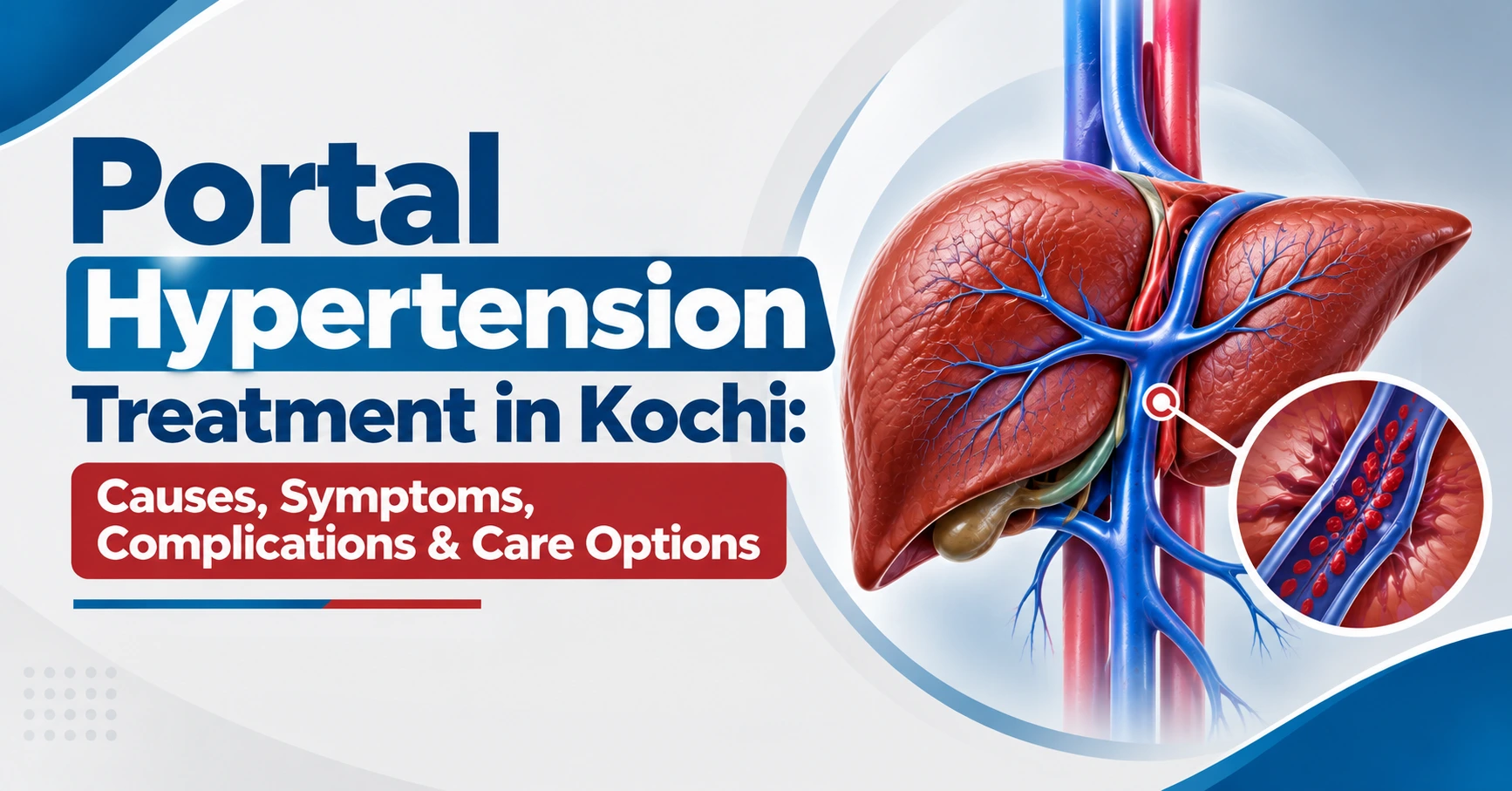
Portal Hypertension Treatment in Kochi: Causes, Symptoms, Complications & Care Options
Portal hypertension is increased pressure in the portal venous system, the network of veins that carries blood from the digestive organs and spleen to the liver. It is commonly associated with advanced liver disease and cirrhosis, but it can also occur because of problems such as portal vein thrombosis or other blockages affecting blood flow.
Treatment for portal hypertension depends on its underlying cause, severity, liver function, and complications. Care may include treatment of the underlying liver disease, medicines to reduce portal pressure or prevent complications, endoscopic treatment of varices, management of ascites and hepatic encephalopathy, and procedures such as TIPS in selected patients.
For people looking for portal hypertension treatment in Kochi, evaluation by a hepatologist or gastroenterologist is important, particularly when there are signs of gastrointestinal bleeding, abdominal fluid accumulation, jaundice, or changes in mental function.
Quick Answer: What Is the Treatment for Portal Hypertension?
There is no single treatment that works for every case of portal hypertension.
Doctors first determine why the portal pressure is elevated and whether complications are already present. Depending on the situation, treatment may include:
- Managing the underlying liver disease or vascular problem
- Medicines used to reduce the risk of variceal bleeding
- Upper GI endoscopy to assess and treat varices
- Treatment of ascites and related complications
- Treatment of hepatic encephalopathy
- Management of portal vein thrombosis when appropriate
- TIPS or other interventional procedures for selected complications
- Liver transplantation evaluation in advanced liver disease when appropriate
Because portal hypertension can have different causes and stages, treatment should be individualized by a qualified medical team.
What Causes Portal Hypertension?
The portal vein carries blood from the stomach, intestines, spleen, pancreas and related digestive organs toward the liver. When blood flow through this system is obstructed or slowed, pressure can increase.
Cirrhosis and Chronic Liver Disease
Cirrhosis is one of the most common causes of portal hypertension. Scar tissue changes the normal structure of the liver and makes it more difficult for blood to pass through the liver.
Cirrhosis can develop from several chronic liver conditions, including:
- Chronic hepatitis B or hepatitis C
- Alcohol-associated liver disease
- Metabolic dysfunction-associated steatotic liver disease and related conditions
- Autoimmune liver diseases
- Certain inherited or metabolic liver disorders
Portal Vein Thrombosis
A blood clot in the portal venous system can interfere with normal blood flow and contribute to portal hypertension. Evaluation and treatment depend on the location and extent of the thrombosis and the underlying condition.
Other Vascular and Liver Conditions
Other causes can include disorders affecting the hepatic or portal circulation, including Budd-Chiari syndrome, certain vascular disorders, and conditions that obstruct blood flow through or around the liver.
What Are the Symptoms of Portal Hypertension?
Portal hypertension does not always cause obvious symptoms in its early stages. In some patients, the first signs appear when a complication develops.
Possible symptoms and signs include:
- Abdominal swelling caused by ascites
- Swelling of the legs or ankles
- Vomiting blood
- Black or bloody stools
- Enlarged spleen
- Easy bruising or bleeding
- Jaundice associated with underlying liver disease
- Confusion or changes in thinking
- Reduced appetite or general weakness in advanced liver disease
Not everyone with portal hypertension develops all of these symptoms.
What Are the Complications of Portal Hypertension?
Portal hypertension becomes particularly important when it leads to complications.
Esophageal and Gastric Varices
Increased portal pressure can cause veins in the esophagus or stomach to enlarge. These are called varices. If a varix ruptures, it can cause severe gastrointestinal bleeding.
Variceal bleeding is a medical emergency.
Ascites
Ascites is the accumulation of fluid inside the abdomen. It commonly occurs in advanced liver disease and may lead to discomfort, abdominal enlargement, breathing difficulty, or infection in some cases.
Hepatic Encephalopathy
When blood bypasses the liver and toxins accumulate, some people can develop hepatic encephalopathy, which may cause confusion, difficulty concentrating, changes in sleep, or altered mental status.
Enlarged Spleen and Low Blood Counts
Portal hypertension can enlarge the spleen and contribute to changes in blood cell counts. Blood tests may help doctors evaluate these changes.
Kidney and Other Organ Complications
Advanced portal hypertension and cirrhosis can be associated with serious complications involving the kidneys and other organs, including hepatorenal syndrome in some patients.
How Is Portal Hypertension Diagnosed?
Diagnosis usually combines the patient’s medical history, examination, blood tests, imaging, and assessment for complications.
Blood Tests
Blood tests can help evaluate:
- Liver function
- Kidney function
- Blood cell counts
- Evidence of liver inflammation or other underlying disease
- Problems associated with bleeding or chronic liver disease
Doppler Ultrasound
A Doppler ultrasound of the abdomen can assess blood flow in the portal venous system and may help identify abnormalities such as obstruction or altered blood flow.
CT or MRI
Cross-sectional imaging may help doctors evaluate the liver, spleen, portal vein, abdominal fluid, enlarged veins, and other structural abnormalities.
Upper GI Endoscopy
An upper gastrointestinal endoscopy may be used to identify esophageal or gastric varices and, when necessary, treat bleeding through endoscopic techniques.
Portal Hypertension Treatment Options in Kochi
The appropriate treatment depends on the cause and the complications present.
1. Treating the Underlying Liver Disease
The first step is often to identify and manage the condition responsible for portal hypertension.
Depending on the cause, treatment may involve management of chronic viral hepatitis, metabolic liver disease, alcohol-associated liver disease, autoimmune liver conditions, vascular disorders, or other underlying problems.
Treating the underlying condition can help reduce further liver damage and may improve the overall outlook in appropriate cases.
2. Medicines to Reduce the Risk of Variceal Bleeding
Doctors may prescribe medicines that reduce portal pressure and the risk of bleeding from varices in appropriate patients. The choice of medicine depends on factors such as liver disease severity, blood pressure, kidney function, and other medical conditions.
Medication should be taken only under medical supervision because the appropriate drug and dose vary between patients.
3. Endoscopic Treatment for Varices
If enlarged veins are identified during endoscopy, a gastroenterologist may recommend endoscopic therapy based on the type and severity of the varices.
For bleeding esophageal varices, endoscopic band ligation is one established treatment approach. Acute variceal bleeding also requires urgent medical management and endoscopic intervention.
4. Ascites Management
Treatment of ascites may include dietary sodium management, prescribed diuretics, and removal of abdominal fluid through paracentesis when clinically indicated. Doctors also evaluate patients for infection and other complications.
The treatment plan should be individualized, particularly in people with kidney dysfunction or advanced liver disease.
5. Treatment of Hepatic Encephalopathy
Hepatic encephalopathy may require medicines and treatment of triggers such as infection, bleeding, constipation, dehydration, or certain metabolic disturbances.
Because confusion can have many causes, new or worsening changes in mental status require medical assessment.
6. TIPS Procedure
For selected patients with serious complications that are not adequately controlled with standard treatment, doctors may consider a Transjugular Intrahepatic Portosystemic Shunt (TIPS).
TIPS creates a channel within the liver to redirect blood flow and reduce portal pressure. It can be used for selected patients with complications such as recurrent or uncontrolled variceal bleeding and certain cases of refractory ascites.
TIPS is not appropriate for everyone. Doctors consider factors such as liver function, cardiac status, encephalopathy risk, and the specific indication before recommending the procedure.
7. Liver Transplant Evaluation
In advanced liver disease with significant complications or liver failure, a liver transplant may become part of the treatment discussion.
Transplant assessment is individualized and depends on the underlying liver disease, overall health, disease severity, and other clinical factors.
When Is Portal Hypertension an Emergency?
Some complications require immediate hospital treatment.
Go to an emergency department immediately if there is:
- Vomiting blood
- Black, tarry stools
- Significant blood in the stool
- Fainting or severe weakness associated with bleeding
- Severe or rapidly worsening abdominal swelling
- New confusion or difficulty staying awake
- Other signs of major gastrointestinal bleeding or sudden deterioration
A suspected variceal bleed should not be managed at home.
Portal Hypertension Care in Kochi: Which Specialist Should You Consult?
For ongoing evaluation, people with suspected or diagnosed portal hypertension may be referred to a hepatologist or gastroenterologist.
Depending on the patient’s condition, care may also involve:
- Hepatology
- Gastroenterology
- Interventional radiology
- General or liver surgery
- Nutrition support
- Transplant services for selected advanced liver disease cases
A coordinated approach can be particularly important when portal hypertension is associated with cirrhosis, variceal bleeding, ascites, hepatic encephalopathy, or portal vein thrombosis.
When searching for portal hypertension treatment in Kochi, consider whether the care pathway can provide appropriate diagnosis, endoscopy, imaging, management of liver disease, emergency bleeding care, and access to interventional or transplant services when required.
What Can Patients Do to Support Liver Health?
Medical treatment is the foundation of portal hypertension care, but day-to-day management also matters.
Patients should:
- Follow prescribed medicines carefully
- Keep scheduled liver and gastroenterology appointments
- Avoid alcohol when advised by their treating doctor
- Discuss over-the-counter medicines and supplements before taking them
- Follow sodium and nutrition recommendations when prescribed
- Seek prompt medical attention for bleeding, increasing abdominal swelling, fever, or confusion
Diet and lifestyle recommendations should be individualized, particularly in people with advanced cirrhosis or malnutrition.
Portal Hypertension Treatment: Why Early Evaluation Matters
Portal hypertension can develop gradually, and some people may have few symptoms before a serious complication occurs.
Early evaluation helps doctors identify the underlying cause, assess liver function, look for varices and other complications, and determine an appropriate monitoring and treatment strategy. AASLD guidance emphasizes risk stratification, diagnosis, and management of portal hypertension and varices in patients with cirrhosis.
For this reason, persistent liver-related symptoms or known chronic liver disease should not be ignored.
Frequently Asked Questions About Portal Hypertension
What is the best treatment for portal hypertension?
There is no single best treatment for every patient. Management depends on the underlying cause, liver function, portal hypertension severity, and complications. Treatment may involve medicines, endoscopy, management of ascites or encephalopathy, TIPS, or transplant evaluation in selected cases.
Can portal hypertension be cured?
It depends on the cause. If the underlying problem is reversible or treatable, portal hypertension may improve. When significant cirrhosis and permanent liver scarring are present, management generally focuses on controlling portal pressure, preventing complications, and treating the underlying liver disease.
Can portal hypertension cause vomiting blood?
Yes. Enlarged esophageal or gastric varices can rupture and cause gastrointestinal bleeding, including vomiting blood. This is an emergency and requires immediate hospital treatment.
Does portal hypertension always mean cirrhosis?
No. Cirrhosis is a common cause, but portal hypertension can also result from vascular obstruction, portal vein thrombosis, and other liver or circulatory conditions.
Can portal hypertension cause ascites?
Yes. Portal hypertension is an important contributor to ascites, particularly in people with advanced cirrhosis.
When should I see a liver specialist in Kochi?
Medical evaluation is appropriate if you have known chronic liver disease, unexplained abdominal swelling, gastrointestinal bleeding, jaundice, abnormal liver tests, or other symptoms suggesting liver or portal venous disease. Emergency symptoms such as vomiting blood or black stools require immediate hospital care rather than a routine appointment.
Conclusion
Portal hypertension treatment in Kochi depends on understanding the underlying cause and detecting complications early. Management may include treatment of liver disease, medicines, endoscopic therapy for varices, ascites and encephalopathy management, and advanced interventions such as TIPS for selected patients.
Because portal hypertension can become serious without obvious early symptoms, people with chronic liver disease or signs of portal hypertension should seek evaluation from an appropriate liver or digestive-system specialist.