
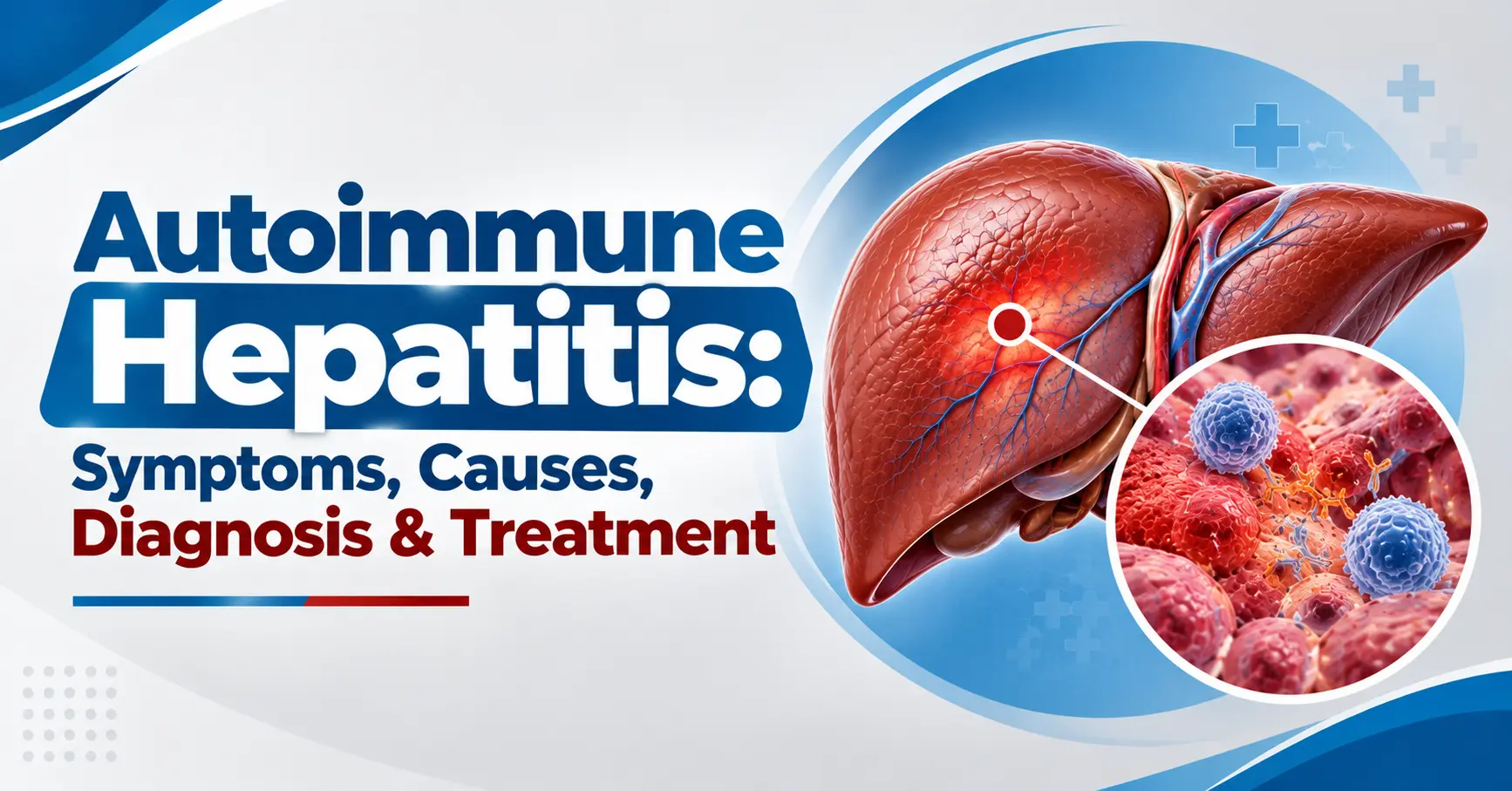
Autoimmune Hepatitis: Symptoms, Causes, Diagnosis & Treatment in Kochi
Autoimmune hepatitis is a chronic immune-mediated liver disease in which the body’s immune system attacks liver cells, causing inflammation and liver injury. It can develop gradually with few symptoms or present more suddenly with significant liver inflammation. Without appropriate treatment, ongoing inflammation can lead to fibrosis, cirrhosis, liver failure and, in some cases, the need for liver transplantation.
One important challenge is that autoimmune hepatitis does not have one single symptom or one test that confirms the diagnosis. Some people have no obvious symptoms and are first identified after abnormal liver blood tests. Diagnosis generally combines the clinical history, liver tests, immunological testing, exclusion of other liver diseases and, when appropriate, liver biopsy.
For patients in Kochi and surrounding areas, understanding these steps can help explain why specialist hepatology assessment is often needed when autoimmune hepatitis is suspected.
Medical disclaimer: This article is for general educational information and does not diagnose or treat an individual. Autoimmune hepatitis requires assessment by a qualified doctor, particularly when liver tests are abnormal or symptoms are concerning.
What Is Autoimmune Hepatitis?
Autoimmune hepatitis, often abbreviated as AIH, occurs when the immune system mistakenly targets the liver.
The resulting inflammation can damage liver cells over time.
Unlike viral hepatitis, autoimmune hepatitis is not caused by hepatitis A, B or C viruses. It is an immune-mediated condition, although researchers believe that a combination of genetic susceptibility and environmental factors may contribute to its development. The exact cause remains uncertain.
AIH can occur in people of different ages and backgrounds. It can range from asymptomatic disease to severe acute liver inflammation or advanced liver disease.
What Causes Autoimmune Hepatitis?
The exact cause of autoimmune hepatitis is not fully understood.
Current evidence suggests that genetic susceptibility and environmental influences may interact and trigger an abnormal immune response against the liver. Researchers continue to study possible triggers, including some medicines and infections.
It is also important to distinguish autoimmune hepatitis from drug-induced liver injury that resembles autoimmune hepatitis. Some medicines can produce an autoimmune-like pattern of liver injury, and the history of medication or supplement use can therefore be important during assessment.
Tell your doctor about:
- Prescription medicines
- Over-the-counter medicines
- Herbal products
- Botanical supplements
- Recent medication changes
This information can help the specialist consider alternative causes of liver inflammation.
What Are the Symptoms of Autoimmune Hepatitis?
Symptoms vary considerably.
Some people have no symptoms at diagnosis, while others develop symptoms related to liver inflammation or, later, complications of advanced liver disease.
Common symptoms can include:
- Persistent tiredness
- Joint pain
- Nausea
- Poor appetite
- Upper abdominal discomfort
- Jaundice
- Dark urine
- Pale stools
- Itching
- Skin changes
Some people may also lose weight unintentionally or develop symptoms associated with cirrhosis if the disease has progressed.
Can Autoimmune Hepatitis Have No Symptoms?
Yes.
This is an important point because a person may feel relatively well while blood tests show elevated liver enzymes.
In some cases, the condition is discovered during evaluation of abnormal ALT or AST levels or another unrelated investigation.
This is one reason persistent or unexplained liver-test abnormalities should be interpreted in clinical context rather than ignored simply because symptoms are mild.
7 Symptoms and Findings That May Prompt Evaluation
1. Persistent Fatigue
Fatigue is a common but nonspecific symptom.
Persistent tiredness can occur with many conditions, so fatigue alone does not establish autoimmune hepatitis. It becomes more relevant when accompanied by abnormal liver tests or other liver-related symptoms.
2. Joint Pain
Joint pain can occur in people with autoimmune hepatitis and may sometimes appear alongside other autoimmune features.
3. Jaundice
Yellowing of the skin or whites of the eyes can occur when liver or bile-related processes affect bilirubin handling.
Jaundice deserves medical evaluation because it has many possible causes and is not specific to autoimmune hepatitis.
4. Dark Urine or Pale Stools
Changes in urine or stool colour can accompany jaundice and other liver or biliary conditions.
5. Loss of Appetite or Nausea
Reduced appetite and nausea can occur during active liver inflammation, but these symptoms have many possible causes.
6. Upper Abdominal Discomfort
Some people experience discomfort in the upper abdomen around the liver area.
Again, abdominal discomfort is nonspecific and requires clinical context.
7. Abnormal Liver Blood Tests Without Clear Symptoms
This can be particularly important.
A person may have elevated ALT or AST without feeling unwell. When liver enzymes remain abnormal without an obvious explanation, autoimmune hepatitis may be one of several diagnoses that a hepatologist considers.
How Is Autoimmune Hepatitis Diagnosed?
There is no single blood test that confirms autoimmune hepatitis.
The diagnosis is made by putting several pieces of evidence together. Current EASL guidance recommends considering IgG elevation, autoantibodies and compatible liver histology, while excluding other causes of acute or chronic liver disease.
The evaluation may include:
Medical history → Liver blood tests → Autoantibody testing → IgG → Imaging → Liver biopsy when indicated → Exclusion of other liver diseases
1. Liver Blood Tests
Doctors commonly assess liver enzymes such as:
- ALT
- AST
Other liver-related blood tests may also be important depending on the clinical situation.
Elevated ALT and AST can indicate liver-cell injury, but they do not by themselves prove autoimmune hepatitis.
2. Autoantibody Testing
Doctors may check for autoantibodies associated with autoimmune hepatitis, including:
- ANA — antinuclear antibodies
- SMA — anti-smooth muscle antibodies
Additional antibody testing may be considered in selected cases.
However, a positive ANA or SMA does not automatically mean that a person has autoimmune hepatitis. These markers can occur in other conditions, which is why diagnosis requires the full clinical picture. AASLD specifically notes that autoantibodies can also be seen in other liver diseases.
3. Immunoglobulin G (IgG)
An elevated IgG level can support the diagnosis of autoimmune hepatitis.
The updated 2025 EASL guideline places particular emphasis on IgG elevation alongside autoantibodies and compatible liver histology rather than relying on one isolated finding.
4. Excluding Other Liver Diseases
Before diagnosing AIH, doctors need to consider other conditions that may produce similar liver abnormalities.
The evaluation may therefore consider:
- Viral hepatitis
- Metabolic liver disease
- Alcohol-related liver disease
- Drug-induced liver injury
- Primary biliary cholangitis
- Primary sclerosing cholangitis
- Wilson disease in appropriate patients
- Other causes of liver inflammation
The 2025 EASL guidance specifically recommends careful exclusion of known causes of acute and chronic liver disease, while recognising that AIH can coexist with conditions such as MASLD, alcohol-related liver disease or viral hepatitis.
5. Liver Imaging
Imaging can help evaluate the liver and look for other abnormalities.
Depending on the patient, doctors may use:
- Ultrasound
- Other abdominal imaging
- Elastography or FibroScan for liver stiffness assessment
Imaging can contribute important information, but it does not replace the overall diagnostic process for autoimmune hepatitis.
6. Is a Liver Biopsy Needed?
A liver biopsy can be an important part of diagnosing autoimmune hepatitis.
A biopsy examines a small sample of liver tissue under a microscope and can help assess the pattern and extent of liver inflammation and injury.
The updated EASL guideline continues to regard liver histology as a cornerstone of AIH diagnosis.
AASLD educational guidance also notes that biopsy can help confirm or rule out AIH when blood-test findings are not definitive because autoantibodies may occur in other liver diseases.
Not every patient needs an identical diagnostic pathway, so the decision to perform a biopsy should be individualized by the treating specialist.
Can Autoimmune Hepatitis Be Diagnosed From a Blood Test Alone?
Usually, no.
Blood tests can provide important clues, but autoimmune hepatitis is diagnosed by combining:
Symptoms and history + liver enzymes + IgG + autoantibodies + exclusion of other causes + liver histology when appropriate
This is an important AEO point because patients searching for “autoimmune hepatitis blood test” often assume one positive result is enough.
It is not.
How Is Autoimmune Hepatitis Treated?
The main goal of treatment is to reduce immune-mediated liver inflammation, achieve biochemical remission and prevent further liver injury and complications.
Treatment commonly involves immunosuppressive medicines.
The exact regimen depends on:
- Disease severity
- Cirrhosis status
- Other medical conditions
- Pregnancy considerations
- Previous treatment response
- Medication tolerance
- Other individual factors
Steroids and Other Immunosuppressive Medicines
Corticosteroids are an important part of treatment for many patients with autoimmune hepatitis. Immunosuppressive medicines may be added or used according to the patient’s circumstances.
The 2025 EASL guideline provides updated treatment pathways and recognises mycophenolate mofetil as a first-line alternative to azathioprine in appropriate patients. It also no longer endorses budesonide as a first-line treatment because of concerns about safety and effectiveness.
This is an important update compared with some older AIH articles.
Why treatment has to be individualized
Medicines used for AIH can have significant side effects.
For example, corticosteroids can be associated with:
- Weight gain
- High blood pressure
- Diabetes
- Bone loss
- Cataracts
- Glaucoma
Immunosuppressive medicines can also affect blood counts, infection risk and other organs.
That is why AIH treatment should be medically supervised rather than adjusted independently.
How Do Doctors Know Whether Treatment Is Working?
Treatment response is monitored through follow-up rather than symptoms alone.
Doctors commonly monitor:
- ALT
- AST
- IgG
- Symptoms
- Medication side effects
- Evidence of liver injury or fibrosis
The goal is generally complete biochemical response, with normalization of relevant biochemical markers over time.
The updated 2025 EASL guideline broadens assessment of treatment response to a 6–12 month window, rather than treating six months as a rigid cutoff for every patient.
Is Autoimmune Hepatitis a Lifelong Condition?
It can be.
Some patients achieve remission with treatment, but relapse is common after treatment is stopped, and some patients require long-term or lifelong management.
This is why treatment should not be discontinued simply because a person feels well or their liver tests have improved.
The decision to reduce or stop treatment requires specialist assessment and monitoring.
What Happens If Autoimmune Hepatitis Is Not Treated?
Persistent inflammation can progressively damage liver tissue.
Possible complications include:
- Liver fibrosis
- Cirrhosis
- Portal hypertension
- Liver failure
- Acute liver failure in severe presentations
- Hepatocellular carcinoma risk in the setting of cirrhosis
Advanced disease may eventually require liver transplantation.
This does not mean that every person diagnosed with AIH will develop these complications. Appropriate treatment and monitoring can substantially alter the course of the disease.
Can Autoimmune Hepatitis Lead to Liver Transplant?
In severe cases, yes.
Liver transplantation may become necessary when autoimmune hepatitis progresses to advanced liver failure or when acute liver failure occurs and medical treatment is not sufficient.
Importantly, a diagnosis of autoimmune hepatitis does not mean that a transplant is inevitable.
The purpose of early specialist treatment is to control inflammation and reduce the risk of progression.
Autoimmune Hepatitis and Other Autoimmune Conditions
Autoimmune hepatitis can occur alongside other autoimmune disorders.
Examples described in clinical references include:
- Thyroid autoimmune disease
- Celiac disease
- Rheumatoid arthritis
- Other autoimmune conditions
The presence of another autoimmune condition does not diagnose AIH, but it may be relevant when the doctor is assessing the overall clinical picture.
Autoimmune Hepatitis and Abnormal Liver Function Tests
This is where your existing Abnormal Liver Function Tests article should act as a supporting cluster page rather than being repeated here.
The relationship is:
Abnormal ALT/AST → Differential diagnosis → Autoimmune markers/IgG → Specialist evaluation → AIH diagnosis
Your current abnormal-liver-tests article already explains that abnormal liver tests do not automatically mean one specific liver disease.
So this AIH article should go deeper into what happens when AIH becomes one of the diagnostic possibilities, rather than repeating the general explanation of ALT, AST and liver-test interpretation.
When Should You See a Hepatologist for Possible Autoimmune Hepatitis?
A hepatology evaluation may be appropriate when there are:
- Persistent unexplained elevations in ALT or AST
- Elevated IgG
- Positive autoimmune liver antibodies
- Unexplained jaundice
- Recurrent liver-test abnormalities
- Suspected autoimmune liver disease
- A liver biopsy suggesting autoimmune hepatitis
- A known autoimmune condition with unexplained liver abnormalities
The AASLD states that patients with suspected AIH should be evaluated by hepatology for consideration of biopsy and treatment when suspicion remains high.
What Should You Take to an AIH Consultation?
Bring the information that can help the hepatologist understand the full picture:
Blood Tests
- ALT
- AST
- Bilirubin
- ALP/GGT when available
- IgG
- Autoantibody reports
Imaging
- Ultrasound
- Elastography/FibroScan reports
- CT/MRI reports if relevant
Previous Procedures
- Liver biopsy reports
- Endoscopy reports when relevant
- Previous hospital records
Medication Information
Include:
- Prescription medicines
- Over-the-counter medicines
- Herbal preparations
- Supplements
This is especially important because some medicines can cause liver injury that resembles autoimmune hepatitis.
Autoimmune Hepatitis Treatment and Liver Care in Kochi
For patients in Kochi and Ernakulam, autoimmune hepatitis falls within specialist hepatology rather than being treated simply as a general digestive complaint.
The Digestive & Liver Care Clinic’s hepatology service is led by Dr. Harikumar R. Nair, MD, DM, MRCP(UK), FRCP(Edin), with a Fellowship in Hepatology from Switzerland. The clinic currently states that he has more than 25 years of clinical experience in hepatology and liver-transplant medicine.
The current hepatology service lists diagnostic support including:
- Liver blood tests
- Viral marker testing
- Ultrasound/imaging support
- FibroScan
- Liver biopsy when required
- Structured long-term liver monitoring
This is particularly relevant for AIH because diagnosis often requires combining laboratory, imaging and histological information rather than relying on a single test.
Frequently Asked Questions
What is autoimmune hepatitis?
Autoimmune hepatitis is a chronic immune-mediated liver disease in which the body’s immune system attacks liver cells, causing inflammation and potential liver damage.
What are the common symptoms of autoimmune hepatitis?
Fatigue, joint pain, nausea, poor appetite, upper abdominal discomfort and jaundice are among the symptoms that can occur. Some people have no symptoms and are diagnosed after abnormal liver tests.
Can autoimmune hepatitis have no symptoms?
Yes. Some people are asymptomatic when diagnosed and are identified because liver blood tests are abnormal.
What blood tests are used for autoimmune hepatitis?
Doctors may assess liver enzymes such as ALT and AST, immunoglobulin G, and autoantibodies including ANA and SMA. These results need to be interpreted alongside the clinical history and other investigations.
Does a positive ANA mean I have autoimmune hepatitis?
No. ANA can be positive in conditions other than autoimmune hepatitis, so a positive antibody result alone does not establish the diagnosis.
Is a liver biopsy necessary for autoimmune hepatitis?
A liver biopsy is an important part of the diagnostic process in many patients and remains a cornerstone of AIH assessment in current EASL guidance. Whether it is needed depends on the clinical situation.
Is autoimmune hepatitis curable?
Autoimmune hepatitis can often be controlled with treatment, and many patients achieve remission. However, it can be a long-term condition and relapse can occur, particularly after treatment is withdrawn.
What medicines are used to treat autoimmune hepatitis?
Treatment commonly involves corticosteroids and immunosuppressive medicines. Current 2025 EASL guidance recognises mycophenolate mofetil as a first-line alternative to azathioprine in appropriate patients. Treatment must be individualized and monitored by a clinician.
Can autoimmune hepatitis cause cirrhosis?
Yes. Untreated or inadequately controlled autoimmune hepatitis can progress to liver fibrosis and cirrhosis.
Does autoimmune hepatitis always require a liver transplant?
No. Most management focuses on controlling immune-mediated inflammation and preventing progression. Transplantation is considered for selected patients with acute liver failure or advanced liver disease when appropriate.
Which specialist treats autoimmune hepatitis?
A hepatologist is the specialist most directly focused on liver diseases, including autoimmune hepatitis. A gastroenterologist with hepatology expertise may also manage the condition.
When to Seek Urgent Medical Attention
A routine hepatology appointment is not appropriate for every situation.
Seek urgent medical care for symptoms such as:
- Severe or rapidly worsening jaundice
- Vomiting blood
- Black or tarry stools
- Severe abdominal swelling or pain
- New confusion or marked drowsiness
- Fainting or significant weakness
- Other signs of acute illness
These symptoms can indicate serious liver or gastrointestinal complications and require prompt assessment.
Final Thoughts
Autoimmune hepatitis is a treatable but potentially progressive liver disease that requires a structured diagnosis and long-term follow-up.
The key points are:
Symptoms may be mild or absent → Liver tests may provide the first clue → Autoantibodies and IgG support the evaluation → Other causes must be excluded → Liver biopsy may be important → Treatment is individualized → Ongoing monitoring matters
The 2025 EASL guideline reinforces the importance of combining clinical, laboratory and histological information rather than relying on a single test. It also provides updated treatment recommendations, including the role of mycophenolate mofetil and revised guidance around treatment response.
For patients in Kochi with unexplained liver abnormalities or suspected autoimmune liver disease, specialist hepatology assessment can help determine which investigations and treatment pathway are appropriate.